
Aging Clay and Cast Iron Replaced Efficiently
Sewer line excavation in Bradford for residential and rural properties with failing underground runs
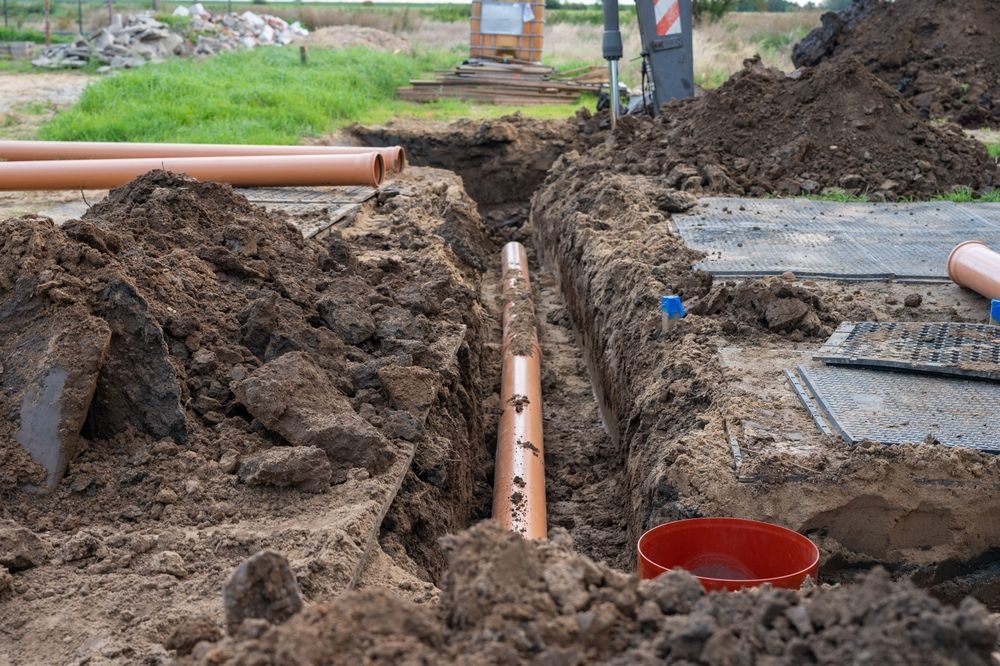
Established homes and rural properties around Kewanee and Toulon frequently have aging clay or cast-iron sewer runs that have to be opened and replaced without tearing up the rest of the yard. Hometown Suds and Sod excavates sewer lines under six feet deep for homes and rural properties across central Illinois, with the owner operating his own excavator on each job from locating the line to backfilling and grading. You get one person managing the entire dig, so the estimate reflects the actual work sequence and site conditions.
The job starts with an on-site visit to confirm the line location and depth and to talk through the route to the main. The owner excavates with his own machine, keeps the trench as narrow as the work allows to limit lawn damage, and backfills and grades the ground when the new line is in. The estimate lists what is included before any digging begins, and free estimates are offered on every job.
Schedule a property visit to confirm line location, depth, and what the excavation will include.
Why Clay and Cast Iron Fail and How to Stop It
Clay sewer pipe cracks when tree roots penetrate joints searching for moisture, and cast iron corrodes from the inside as acids and sulfides produced by waste decomposition eat through the metal. The owner excavates to expose the damaged section, works within the marked corridor to avoid nearby utilities, and backfills in compacted layers after the plumber installs the new PVC or ABS line that resists root intrusion and corrosion.
Once the trench is closed, drains flow freely without slow clearing or backup, sewage odors disappear from the yard, and the ground surface is graded level to match the surrounding lawn. The trench width is kept to the minimum needed for safe access, which reduces the amount of turf that needs replanting and limits soil disturbance around trees and landscaping.
Excavation covers digging, backfill, and grading. Sewer line replacement, fittings, and connection to the main are handled by a licensed plumber and are priced based on the length of the run and the materials specified by code.
What Property Owners Ask About the Work
Sewer line excavation on older properties involves locating buried runs that may not follow current lot lines, managing narrow access between structures, and restoring the yard without leaving settling or drainage issues.
How is the sewer line located before digging?
The owner uses the cleanout location and visible slope patterns to estimate the run, confirms depth with a probe or hand shovel at test points, and requests utility locates to mark other buried lines that cross the route.
What depth is typical for residential sewer lines?
Most residential sewer mains sit between 3 and 5 feet deep, with the service line graded downward from the house foundation to meet the main at the property line or street connection.
Why does the trench need to follow a specific slope?
Gravity sewer systems rely on continuous downward grade to move waste without pumping, so the trench must maintain at least 1/4 inch of drop per foot of run to prevent solids from settling and clogging the line.
What happens if the excavation uncovers additional damage beyond the original scope?
The owner stops work, documents the condition, and discusses options with you before proceeding, so you understand what additional excavation or repair is required and how it affects the timeline.
How is the yard restored after the line is replaced?
Topsoil is stripped and stockpiled before digging, native soil is backfilled and compacted in layers around the new pipe, and the topsoil is spread back over the trench and graded to match the surrounding surface.
Hometown Suds and Sod also digs sewer line repairs in Wyoming, Galva, Kewanee, Toulon, and Princeton. Arrange an estimate to walk the route, confirm depth, and review what the excavation will involve before scheduling the work.